Dentists on call at a hockey rink
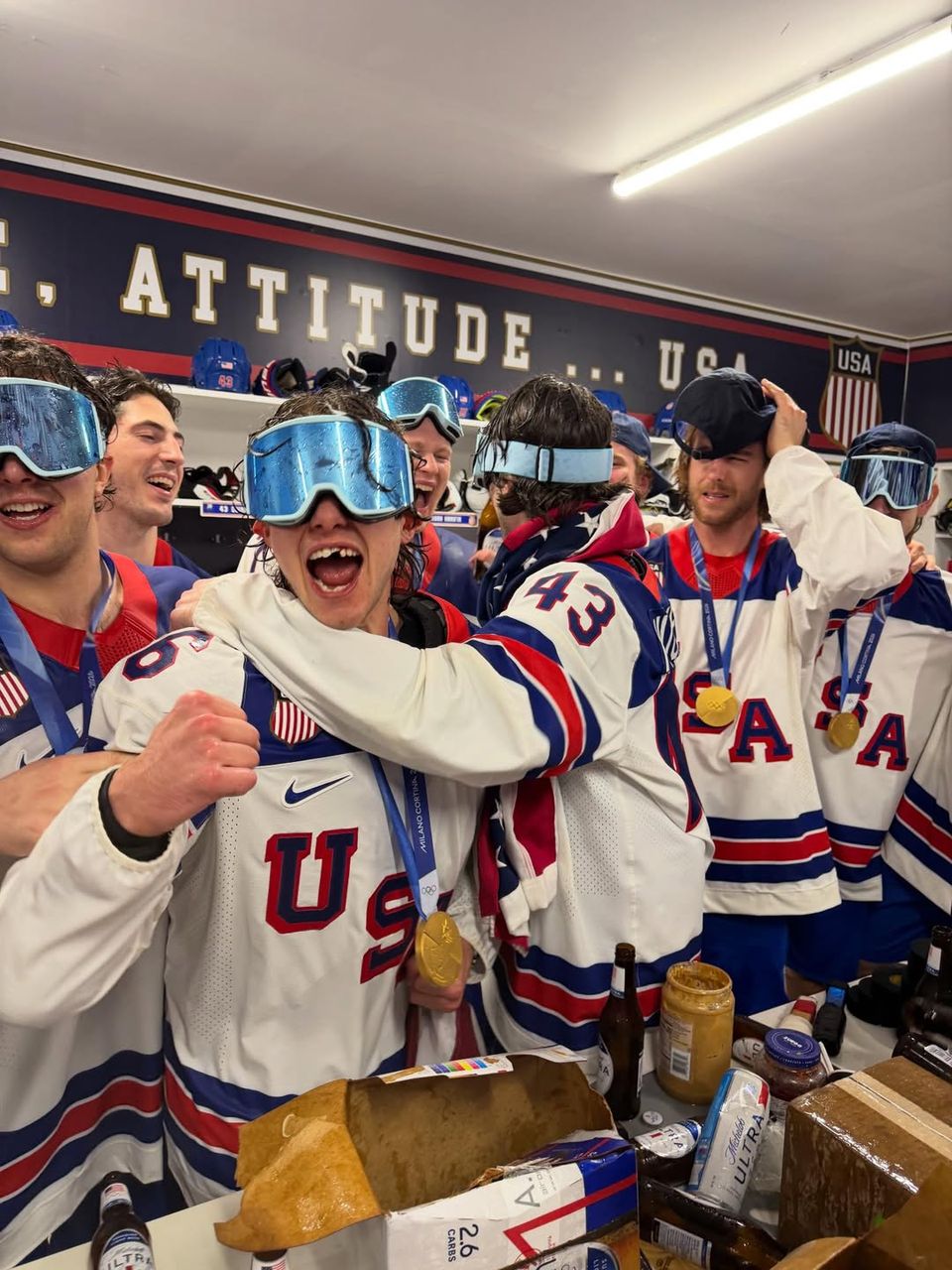
Injuries are common in elite sports, including professional sports. This is because it's a world of intense competition between the best in the country and the best in the world, and it's a professional world where astronomical sums of money are at stake.
Right now, the amount of money Inter Miami, an American soccer team, has made in the last three years since signing Lionel Messi is easily a trillion dollars.
But it's the sports dentists who are thriving in some of the elite sports that have caught our attention. Recently, the Associated Press profiled dentists in the National Hockey League (NHL).
The news organization covered the men's ice hockey final at the Milan-Cortina Winter Olympics in Italy in February.
The United States defeated Canada 2-1 in overtime. It was the first victory in 46 years, but forward Jack Hughes, 24, suffered major injuries, including one of his teeth being knocked out and another partially broken.
Hughes was struck in the mouth by a stick swung by Canada's Sam Bennett (30) during a scuffle in the third period. It's called a "high-sticking" penalty in sports lingo.
Bennett was sent off for four minutes and Hughes was given a separate two-minute booking. After the game, Hughes made headlines around the world when he took to the podium smiling through a broken tooth.
Some of the broken dental prosthetics were repaired by Jason Shepis, the team dentist for his team, the New Jersey Devils.
Sheppard told The Associated Press that Hughes had previously had nerve and restorative work done on the tooth during the league playoffs, and that part of it broke this time.
Like Hughes' injury, hockey has more dental injuries than any other sport. Take Chris Clark, 50, a veteran NHL skater who is now an assistant general manager for the Cleveland Blue Jackets, who had a puck thrown into his mouth in 2006, knocking out a number of teeth and requiring three hours of major surgery.
On-site sports dentists are responsible for the dental care of players, referees, coaches, and other game officials who are injured on the field. During the regular season, the home team dentist also treats the visiting team. They also coordinate with other doctors.
The dentist will also categorize the injuries into minor injuries that can be treated on-site and serious injuries that require immediate urgent surgery.
Speed Matters in Point-of-Care
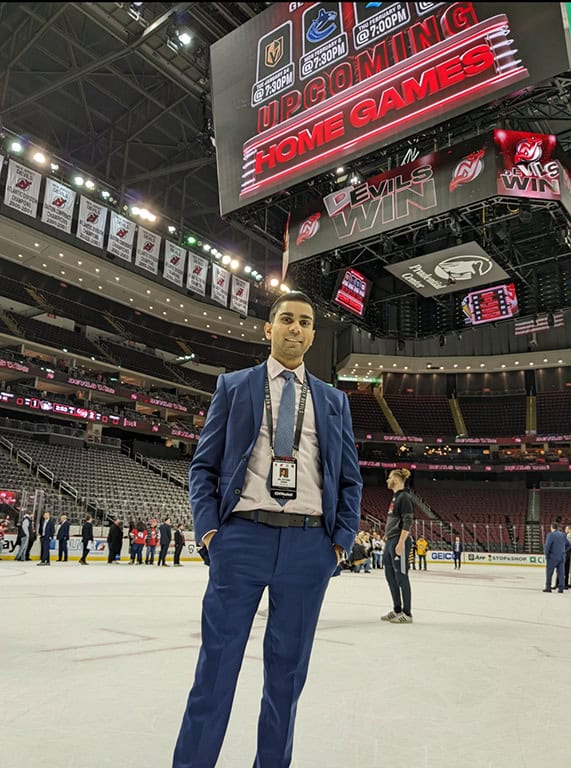
Shyam Shah, a professor at Rutgers University, a prestigious dental school in eastern New Jersey, USA, is a professor in the school's Department of Oral and Maxillofacial Surgery and the team dentist for the NHL's New Jersey Devils.
Although he is mandated to be on the ice for every game, he doesn't watch the games, but is mainly there for emergencies. "Hockey is a sport where you really need a dentist on the field," he told the school's newsletter, adding that "most other sports have full face shields."
In addition, hockey is played with the puck in hand, which makes it more injury-prone due to its high speed.
Dr. Shah also explained the process of healing during breaks. In the NHL, each player is pretty much the best player in the world at their position.
That's why, he explains, it's important to get them back on the field as soon as possible after an injury. When a player is injured, Shah says they use the dental chairs in the stadium to stabilize the player within 15 minutes and rush treatment. There are also doctors on the field, and they consult with each other when it comes to suturing.
Sports Dentists, From Treating Athletes to Return to Play
In an article published in the British Dental Journal in February this year, 'Training Sports Dentists: Role in elite sport and society," Dr. Peter Pine, University College London School of Dentistry, and Dr. Vijay Mathur, All India Institute of Medical Sciences, India, identified the role of the sports dentist as being to help athletes improve their performance, to provide on-the-spot judgment and knowledge, and to be responsive and collaborative.
The authors point out that traditionally, the role of dentists in sports has been limited to treating and preventing dental damage when it occurs, such as injuries. Today, however, a more holistic approach is required for athletes, they explain.
The paper also noted that sports dentists who work with elite athletes require a high level of expertise because they play a variety of roles, including oral health counseling, dental screenings, first aid for facial trauma during competition, and determining whether an athlete can return to play after trauma.
To this end, the paper emphasized the role and training of dentists with comprehensive expertise, including facial anatomy, understanding of head injury, tooth fixation, restorative dentistry knowledge, and prevention strategies.
Writer. Hyuntaek Lee
<A former newspaper journalist who worked for 18 years at JoongAng Ilbo>, <and Chosun Ilbo>. She is currently working as a freelance contributor and planning the second act of her life. In addition to journalism, she has worked in public relations and marketing at JTBC Broadcasting and Edelman Global Advisory in the United States.
Get new stories from Minish in your inbox.
Check your inbox and confirm your subscription.
Something went wrong. Please try again.