[Q&A] From Lecture to Minish...Dr. Seung-Koo Kang "I'm a doctor who wants to balance life beyond the oral cavity"
![[Q&A] From Lecture to Minish...Dr. Seung-Koo Kang "I'm a doctor who wants to balance life beyond the oral cavity"](https://storage.ghost.io/c/c1/f6/c1f64215-c84f-40a8-be4a-fce0a462acd7/content/images/size/w960/2026/10/sgangseunggu-weonjang-03438-1.jpg)
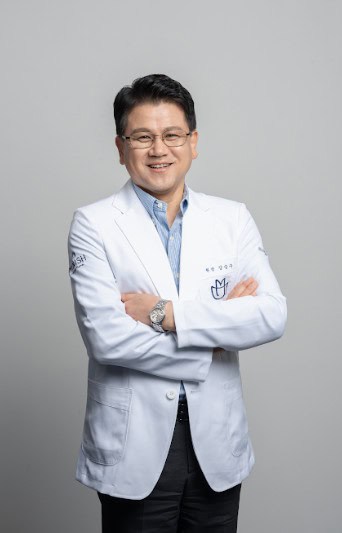
A graduate of Kyung Hee University School of Dentistry and a graduate of Osaka Dental School in Japan, Dr. Kang has been practicing orthodontics for over 30 years.
Having spent many years training juniors at his alma mater, he balances clinical and academic work and brings the orthodontic principle of "function creates beauty" to his Minish practice.
More than just an alignment technician, his practice is about life balance and restoring oral function, which adds deep academic weight to Minish's approach to conservative care. Here's what he had to say.
Q. Can you tell us a little bit about yourself?
Dr. Kang is the head of the orthodontic department at Minish Dental Hospital. He graduated from Kyung Hee University School of Dentistry in 1994 and became an orthodontist.
After a stint in public health, he pursued a degree in orthodontics at Osaka Dental University in Japan, and then spent many years practicing, teaching, and researching at his alma mater, Kyung Hee University School of Orthodontics.
Today, she strives to balance being a clinician and an academic by continuing to see patients in the clinic and participating in conferences and academic research.
Q. What are the similarities between orthodontics and Minish treatment?
Orthodontics is the field that deals with the arrangement, bite, and function of the teeth.
At first glance, Minish treatment may seem like "cosmetic prosthetics" or "teeth makeover," but it's actually more than just aesthetics, it's about restoring oral function and preventive care.
There's a saying in orthodontics that "function makes beauty". What resonated with me most about Minish is that he doesn't sacrifice function for beauty, but rather seeks an aesthetic restoration that honors function and structure.
Q. Can you tell us a little bit more about your background and activities?
After graduating from Kyung Hee University School of Dentistry, he completed his training at Kyung Hee University Dental Hospital's Orthodontic Department and became an orthodontist. He then broadened his academic foundation by pursuing a degree at Osaka Dental University's Orthodontic Department in Japan.
After graduation, I worked for many years at my alma mater, Kyung Hee University Department of Orthodontics, where I trained junior faculty members and combined teaching, research, and clinical practice. I have always endeavored to uphold standards and principles academically while taking responsibility for each patient both inside and outside the clinic.
I have also been involved in academic activities, serving as an active member, fellow, and council member of relevant academic societies to further my professional development, and practicing social responsibility through volunteer activities.
He has also been involved in teaching as a visiting professor at dental schools and dental hospitals, passing on his knowledge and experience to the next generation.
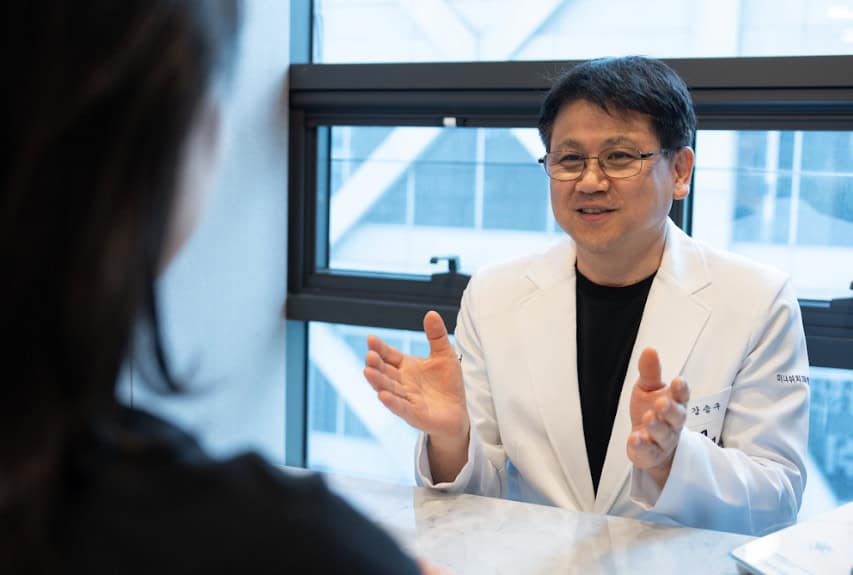
Q. What is Dr. Kang like outside of the clinic? What are his hobbies?
I value my time to recharge, and after work, I usually spend it listening to classical music or reading a book. Sometimes I play golf with my coworkers, but it's still a love-hate sport because it's always a mixed bag.
Q. I've heard you have a particular love for classical music, what is it about it that appeals to you?
I believe that classical music is one of the most important cultural heritage of mankind. It has no tangible form, but its beauty is only revealed when the conditions of synchronicity and resonance are met.
In this respect, it has a deeper meaning than any other art, and I enjoy it as a hobbyist.
Q. You said reading books is an old habit of yours, what are your interests?
In addition to my major books, I have been reading books on politics and economics, society and culture, history and geopolitics, and foreign languages since I was a student.
I think it's a process of filling my curiosity about the world with second-hand experiences instead of first-hand experiences. Even though I'm a science student, I enjoy the gap between authority and human identity, and I think it gives me new ideas and a sense of balance.
Q. The first motto of your organization is "易地思之", what does it mean?
Reverse geography is about switching places and walking in the other person's shoes. In healthcare, there is a constant intersection between providers and patients, medical and administrative staff, and producers and consumers.
Depending on the situation, I might be a patient, an organizational member, or a consumer, and in each case I try to empathize as deeply as possible with the other person.
Of the four minds spoken of in the Yuga (compassion, compassionlessness, ungrudgingness, and grudgingness), I keep them organized in my mind so that I can exercise compassion and compassion actively, ungrudgingness moderately, and grudgingness firmly but minimally.
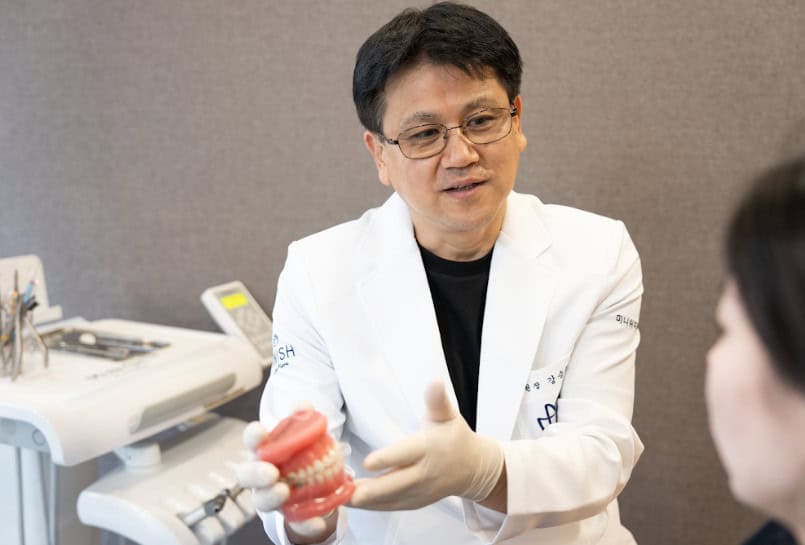
Q. Please also tell us about your second motto, "Ilshinwoo Ilshin" (日新又日新).
It means, "day by day, it becomes new again and again. It's hard to change others, and it's even harder to change yourself.
Still, I'm all about "being a little better today than I was yesterday". I believe that small changes add up and create more valuable human qualities.
I believe that when awakened individuals come together, we become better organizations, societies, nations, and worlds, eventually reaching some "top level" that we are not aware of.
It may sound a little far-fetched, but we see it as our destiny as humans with a finite lifespan and a step closer to the divine realm.
Q. As an orthodontist, what kind of doctor do you want to be to your patients?
I want to be remembered by my patients as a doctor who doesn't just straighten their teeth, but also helps them balance their lives.
Orthodontic treatment is a time-consuming and laborious process that requires a long journey between patient and doctor, and we believe it is the role of the orthodontist to provide full explanation, empathy, and conscientious care with a focus on tooth alignment and bite balance, restoration of oral function, and long-term prognosis and prevention.
Get new stories from Minish in your inbox.
Check your inbox and confirm your subscription.
Something went wrong. Please try again.