Beyond an Ecosystem to a "Global One Team"... The Evolving MINISH Course
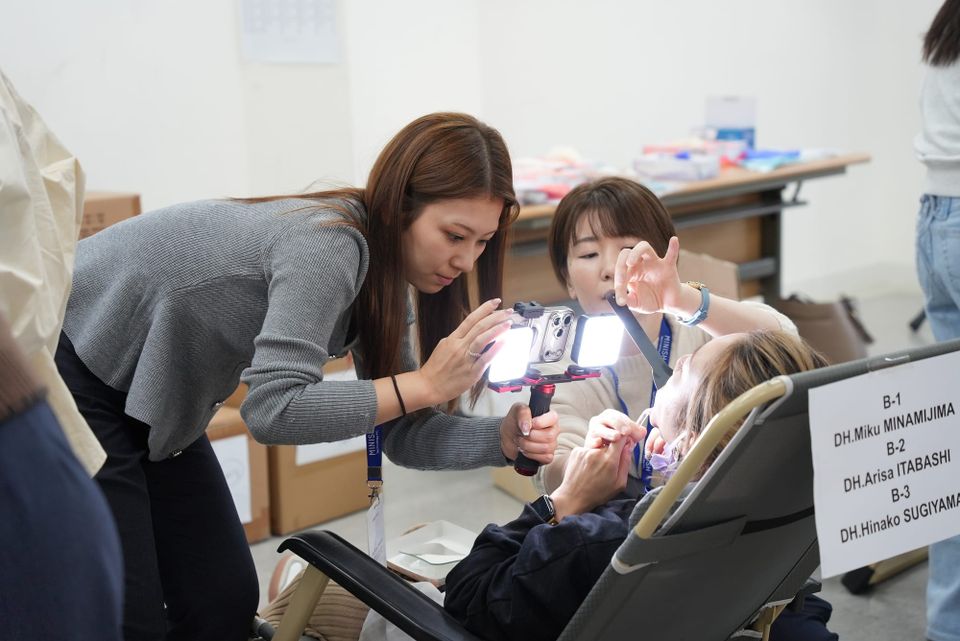
The Global MINISH Course has reached a new level. If April’s course marked the first introduction of clinic-based team training, this edition took it further with one-person, one-station practice, in which all of nearly 100 dentists and dental hygienists worked hands-on without exception. Each 50-minute lecture was followed by up to 20 minutes of Q&A, with participants’ enthusiasm so strong that it pushed back the rest of the schedule.
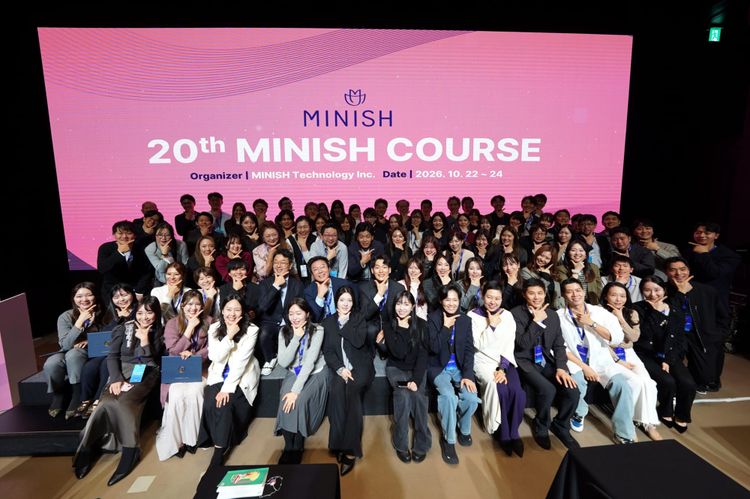
The 20th MINISH Course Global, held October 22–24 at SETEC in Gangnam-gu, Seoul, produced 95 new graduates: 48 dentists and 47 dental hygienists. That is about 60% more than in April (59), bringing the cumulative total to 575 graduates, including 498 dentists and 77 dental hygienists.
Unlike April’s course, where participants practiced in pairs, this edition provided 100 practice kits so that every trainee could work with their own equipment. A step-by-step guided method was introduced: instructors demonstrated each stage, trainees immediately followed along, and those needing help received focused coaching. The approach significantly improved both training efficiency and comprehension.
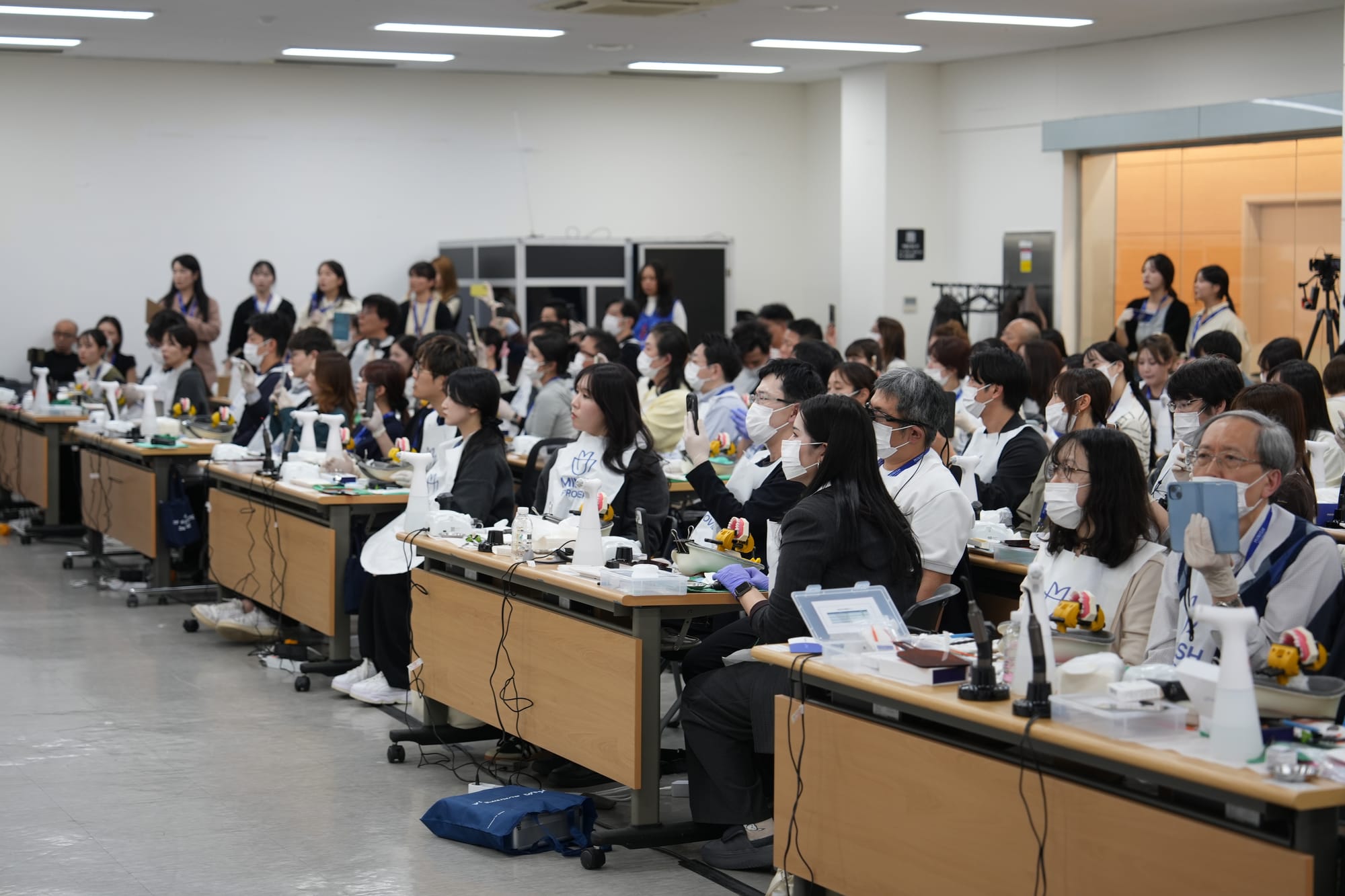
Trainees were also eager to ask questions. While April’s participants often wondered, “Can I really do this?”, this time the questions were practical and clinically oriented, such as “Is this the right way to apply it in our clinic?” Dental hygienists, too, came forward with a flood of questions.
The theory lectures preceding the hands-on sessions fundamentally changed how participants view MINISH. Dr. Sakito Tadokoro, who is preparing to open his clinic in November, said, “Learning histology and dental materials from the ground up helped me understand the value of MINISH much more deeply. What surprised me most was how minimal the tooth reduction is.”
Dr. Shugo Matoba of Nishimura Dental Clinic in Osaka said, “I thought MINISH was simply a technique for placing thin restorations, but I deeply resonated with its preventive perspective and its philosophy of biocompatible treatment. It aligns well with the philosophy we pursue.”
Some said they had gained confidence in explaining the treatment to patients. Dental hygienist Emi Katayama said, “I came to understand that MINISH is not just a prosthesis but a treatment that becomes biologically integrated with the patient’s own enamel. I think I’ll be able to explain it to patients more clearly.”
The geographic reach has also expanded across the Japanese archipelago. Dr. Kensuke Kamada of Kamada Dental Clinic in Sapporo, who signed on as the first provider in Hokkaido, explained why he attended with his staff: “MINISH isn’t a one-person skill. It’s a treatment where in-clinic teamwork is key.”
Dr. Hiroshi Togawa of Togawa Dental Clinic in Kagoshima shared his aspirations: “As this is the first introduction of MINISH in southern Kyushu, I want to spread the word about this advanced, tooth-preserving treatment and bring great satisfaction to our patients.”
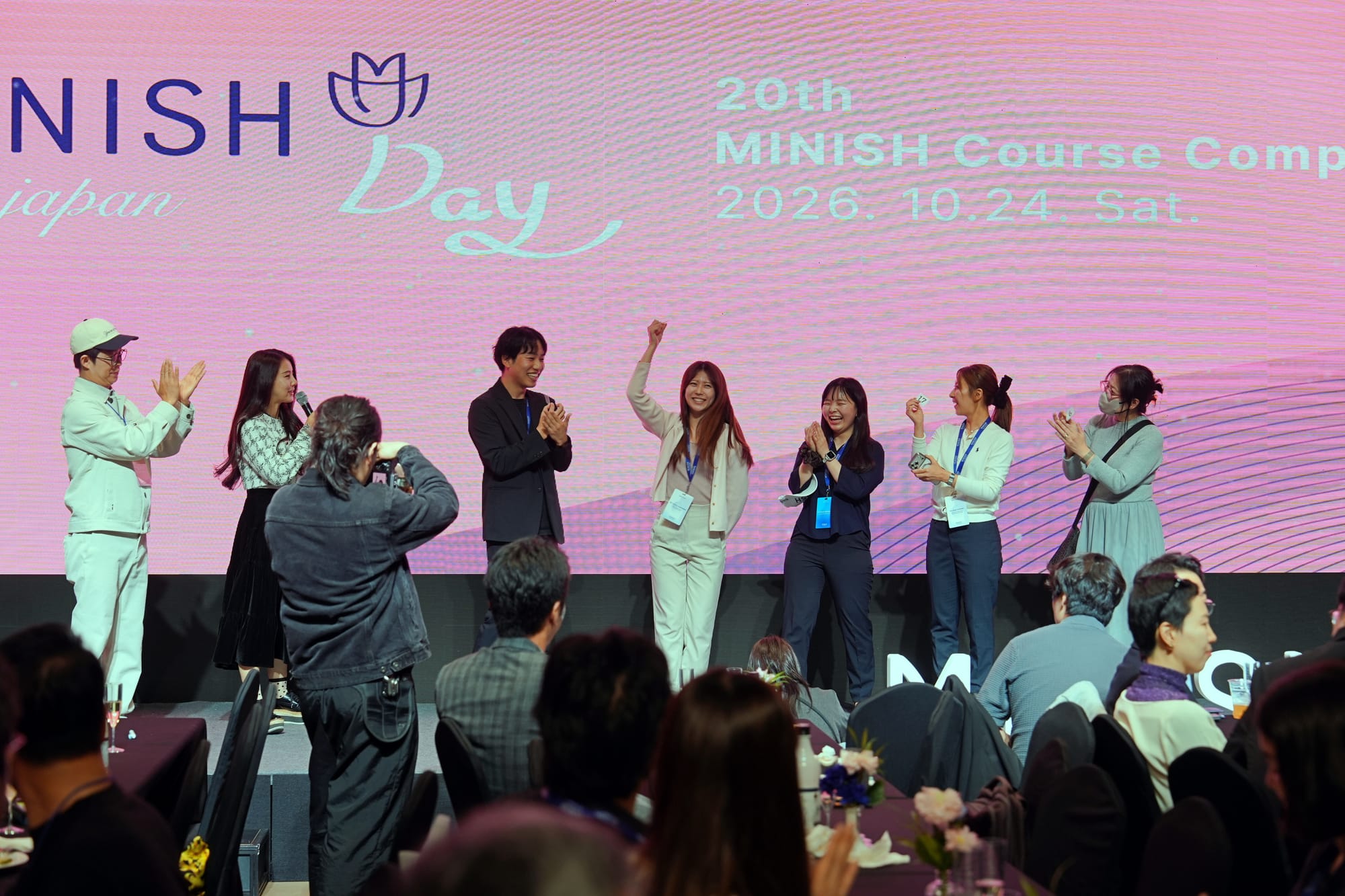
The graduation ceremony on the 24th was more than a formal event; it was a celebration of unity. Cheers and gasps erupted during a quiz event, and trainees donned MINISH caps and danced together. Most striking was the spontaneous interaction among trainees from different organizations and regions. Dentists and dental hygienists alike approached one another, exchanged business cards, took commemorative photos, and greeted each other with “Let’s make MINISH a success together.” It felt like a shift from an ecosystem to a true community.
A “Han River Ramyeon” corner, recreating the charm of Seoul’s Han River parks, proved a big hit with the Japanese trainees. A golf swing contest judged by KLPGA professionals Heo Da-bin and Park Gyeol heated up the atmosphere, and when Kibarun, a YouTuber who introduces Korea to Japanese audiences, visited the venue, a long line of trainees formed to take photos.
As of October, MINISH has 144 provider clinics: 86 in Japan, 41 in Korea, 15 in the United States, and one each in Canada and Singapore, an increase of 38 since April that reflects continued rapid growth. The momentum now carries back to Japan. A seminar in Tokyo on November 15, where local providers will present their own clinical cases, filled all of its roughly 180 seats well in advance.
“This course was about more than an increase in graduates. It confirmed that MINISH has taken root among Japanese dental professionals as a treatment philosophy and a culture centered on in-clinic teamwork,” said Kim Myung-jin, Head of Sales. “Starting with next month’s Tokyo seminar, we will further strengthen our support so that providers can grow together within the MINISH ecosystem.”
Get new stories from Minish in your inbox.
Check your inbox and confirm your subscription.
Something went wrong. Please try again.